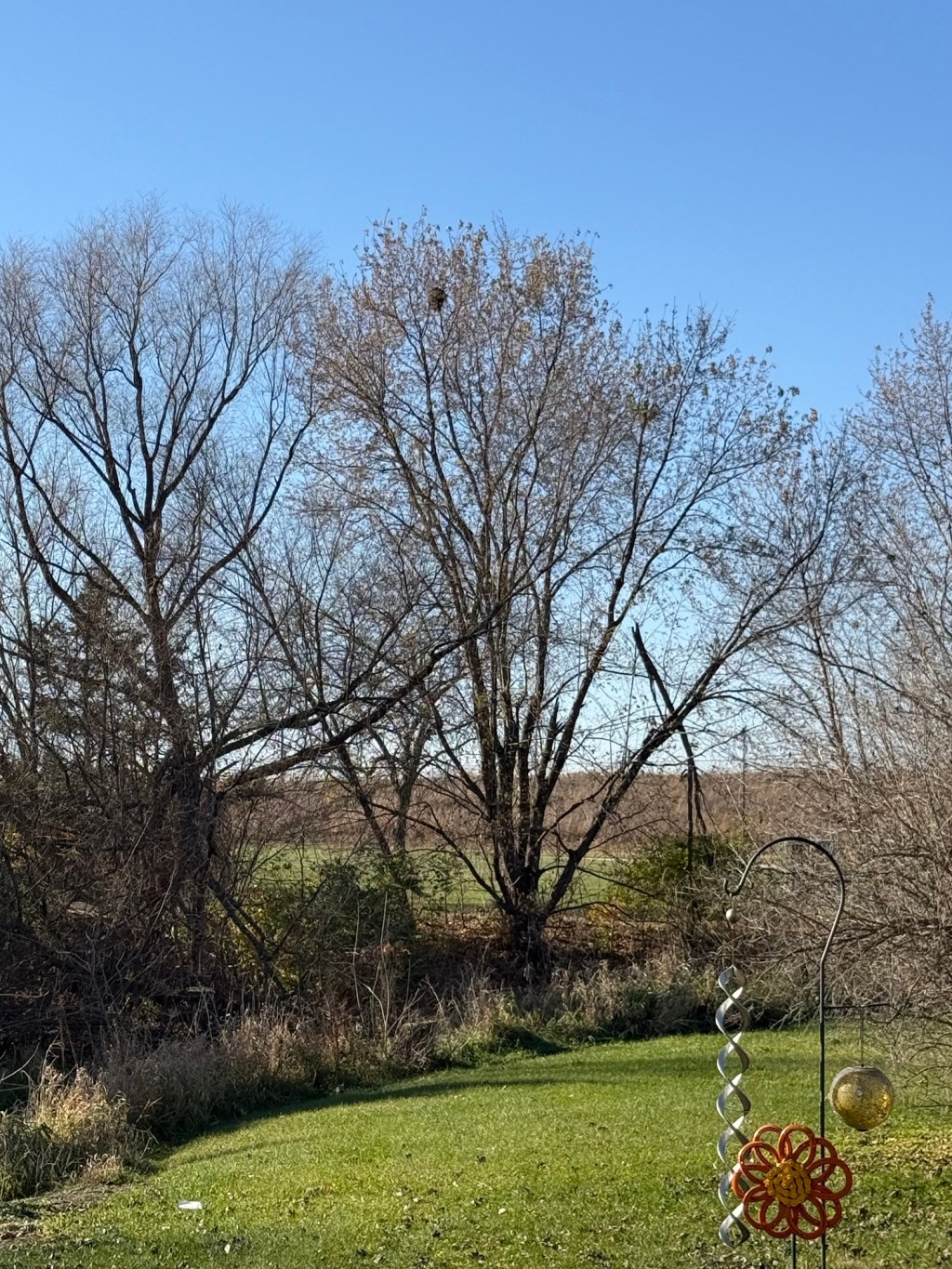
There is something about November that makes the world look a little bare. The trees that provided shade and shelter throughout the summer have released most of their leaves, exposing branches that were once hidden beneath layers of green. The colors that filled the puddle with reflections of summer and autumn have mostly given way to shades of brown, gray, and the occasional remaining splash of color. But today, as I sat enjoying an unexpectedly beautiful November afternoon, I discovered that there is beauty in bare exposure.
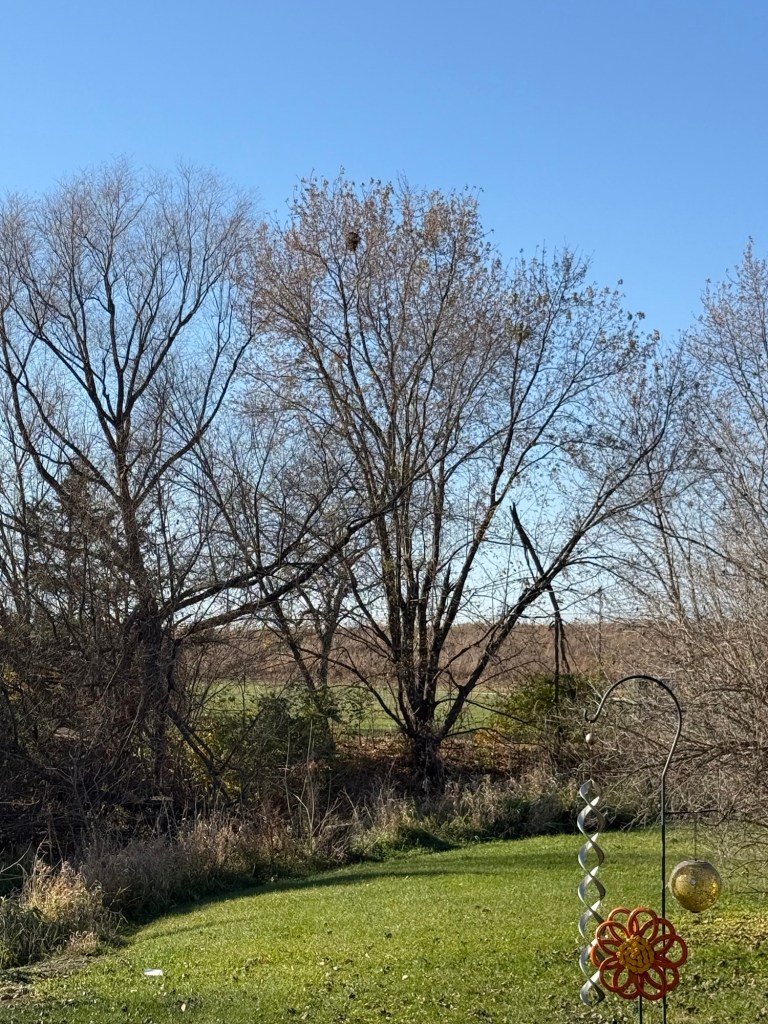
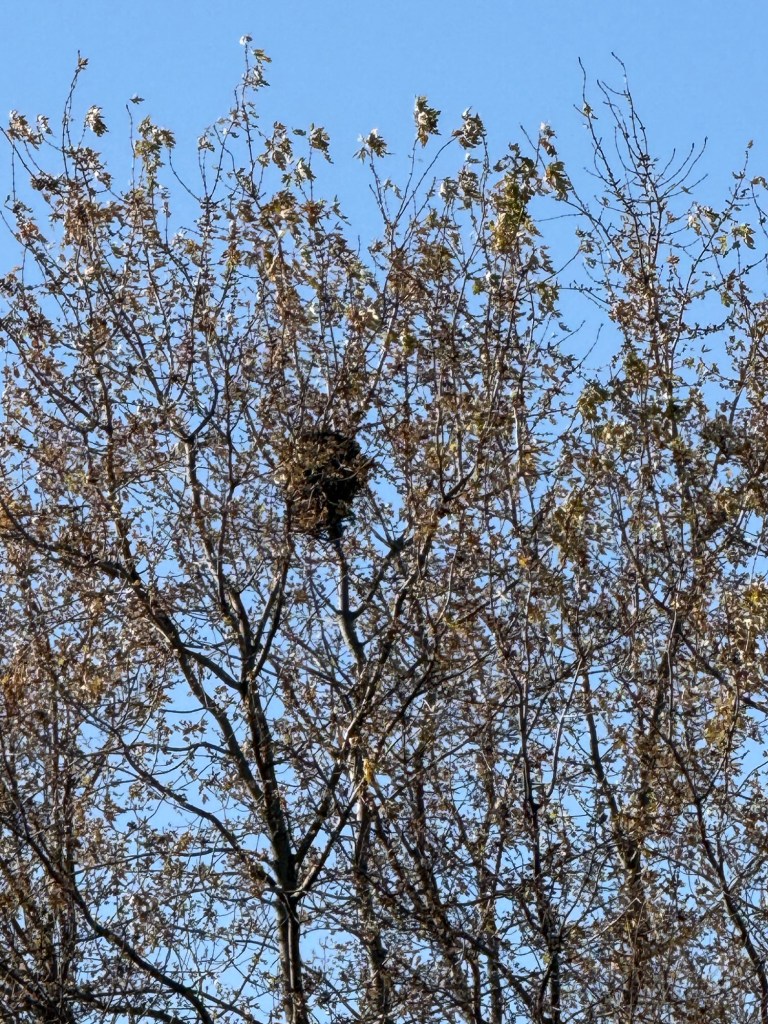
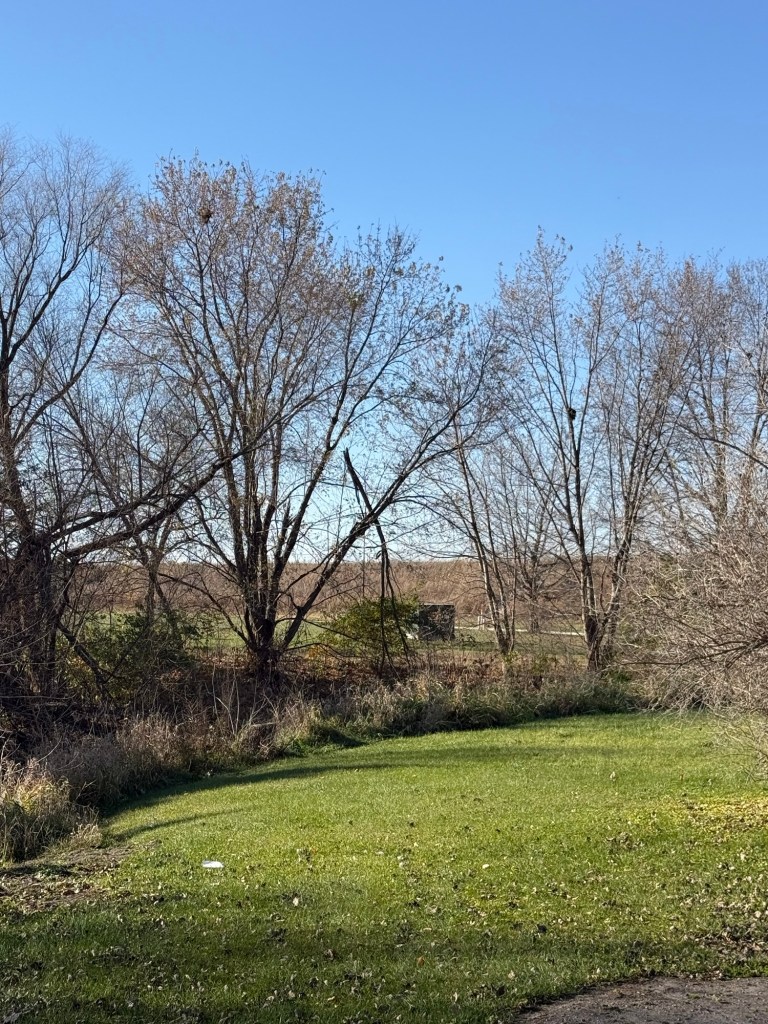
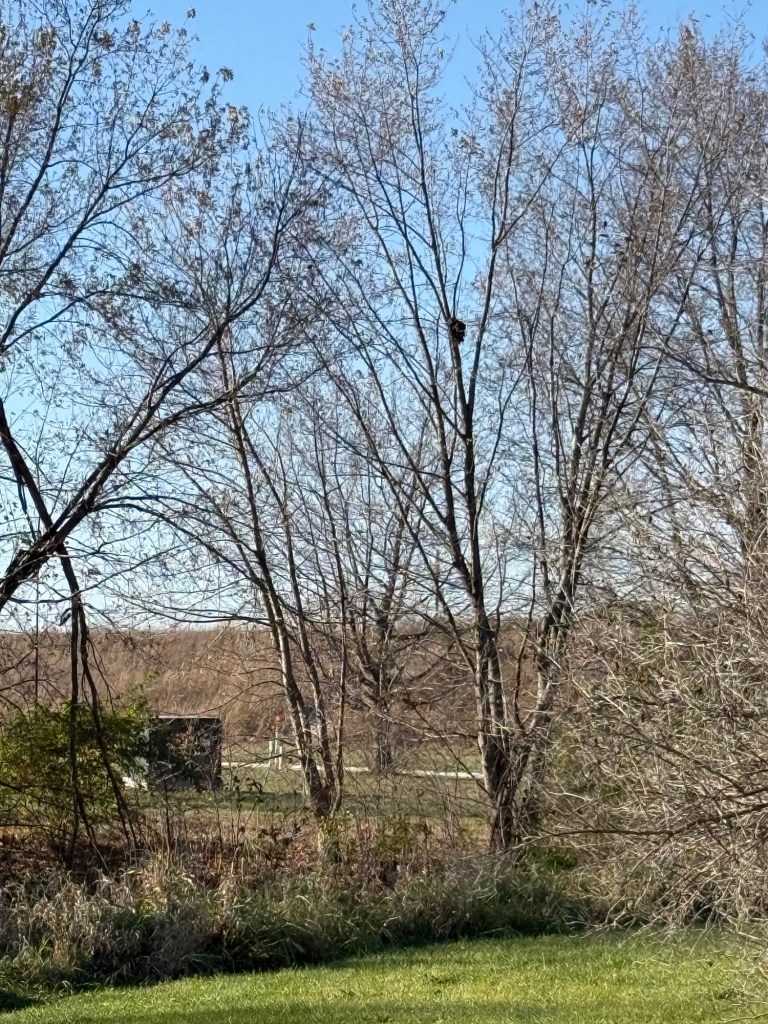
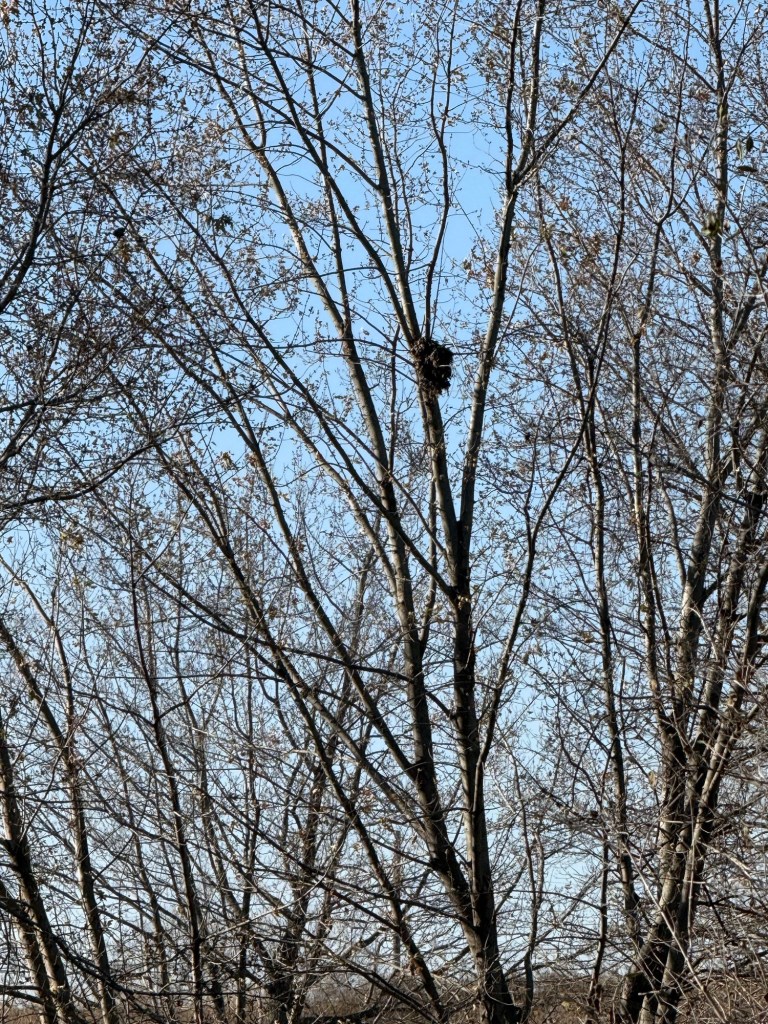
It began with something I hadn’t noticed before. High in the trees beyond the puddle were two dark clusters nestled among the branches. Could they be crow nests? I have heard crows throughout the season and watched them travel through our little corner of the neighborhood, but I had always assumed we were simply part of their daily flight path. Now I wondered whether they might have been neighbors all along, living their lives just beyond what I could see.
The disappearing leaves had given me a different view of a landscape I thought I knew.
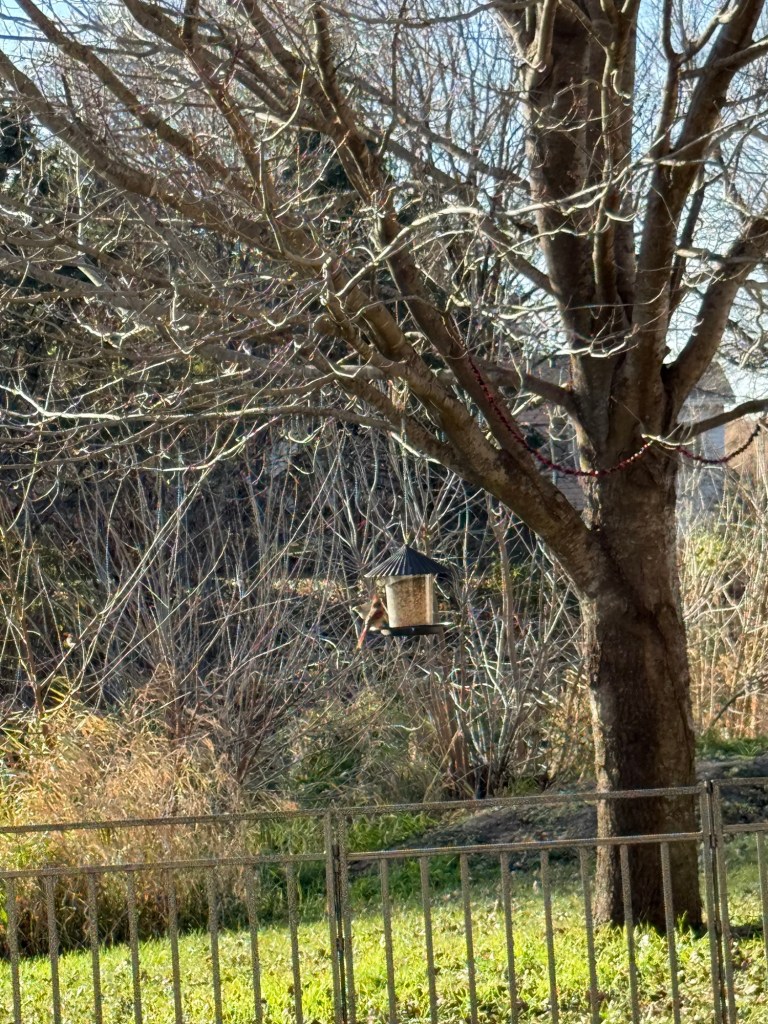
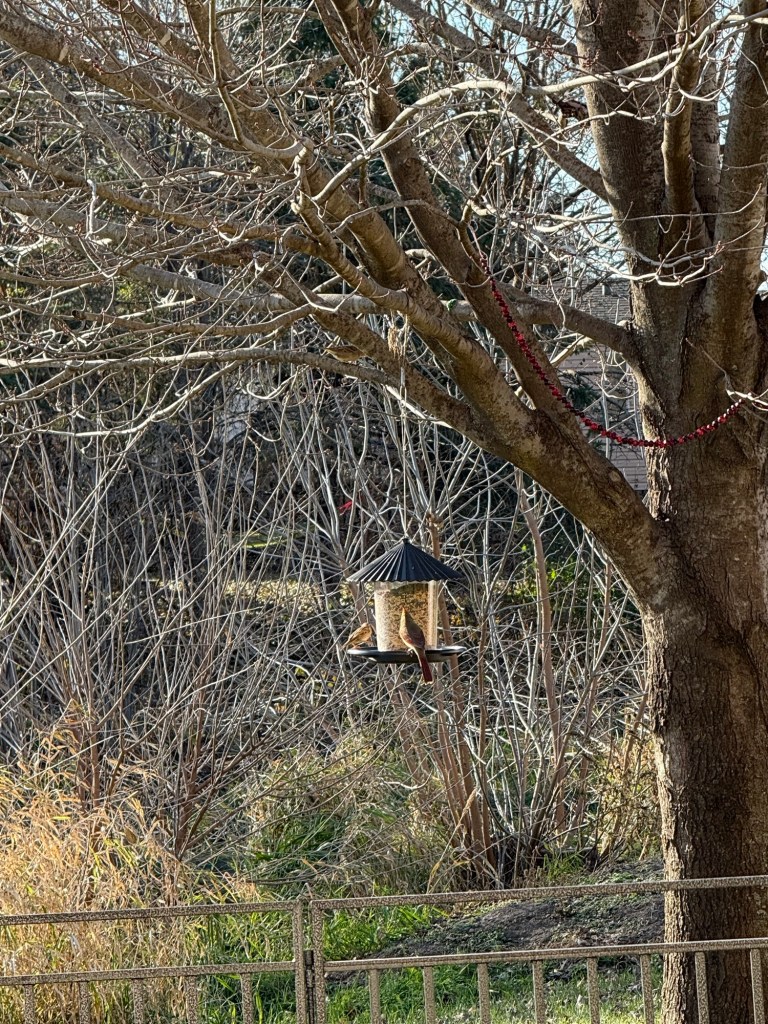
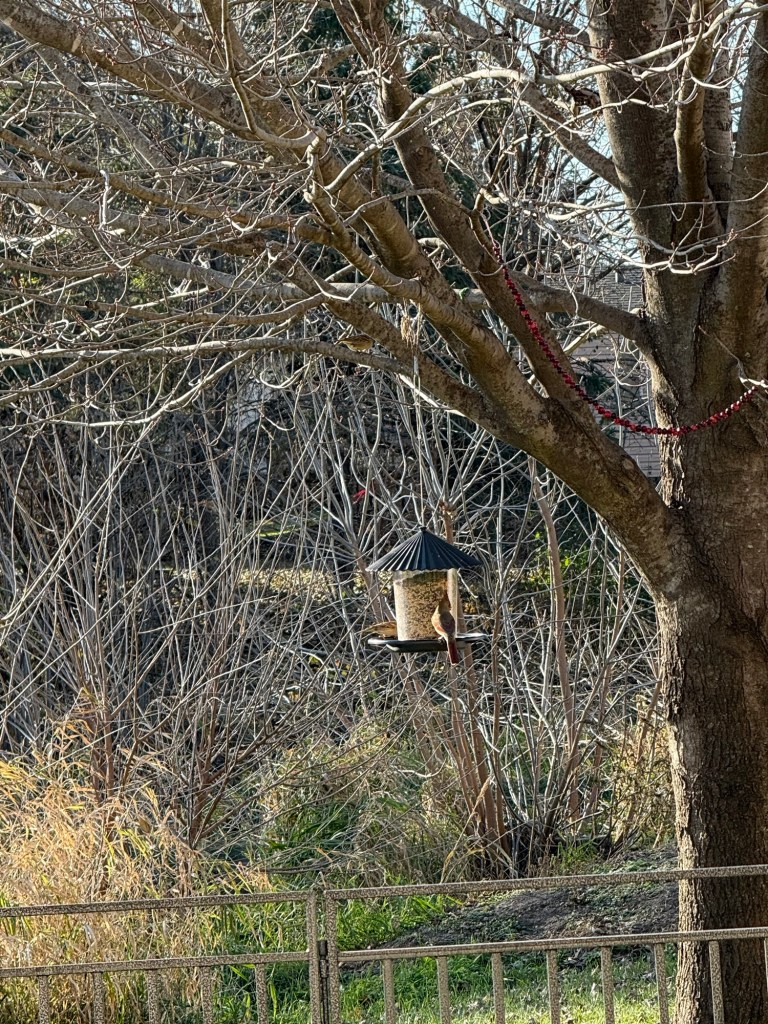
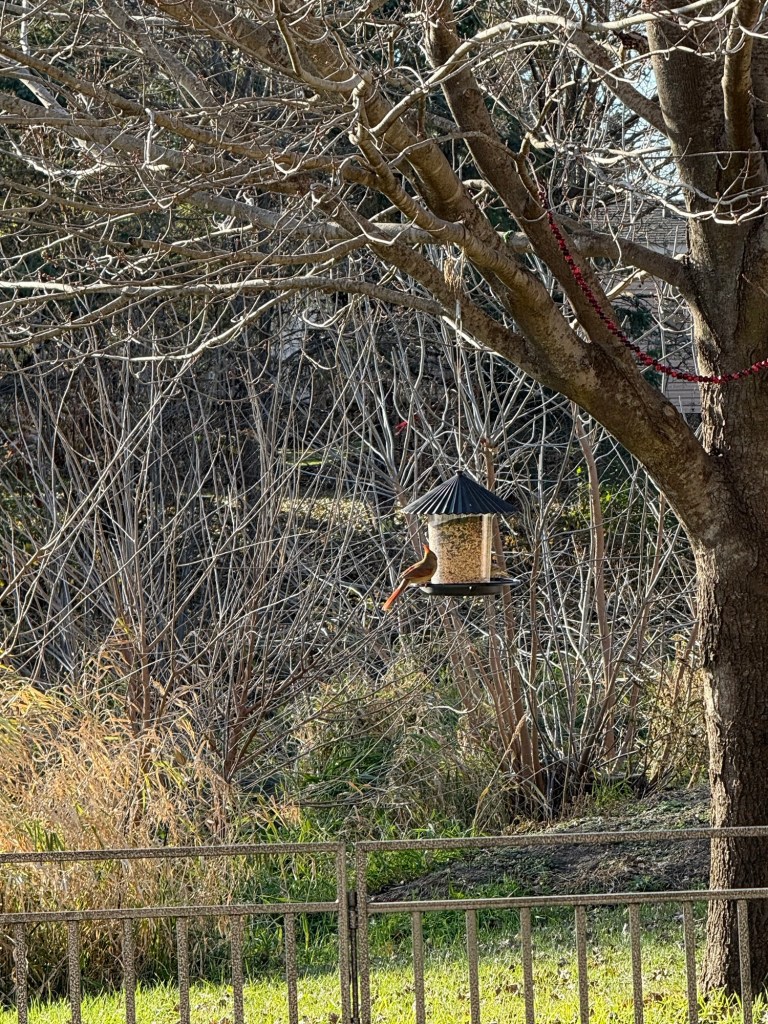
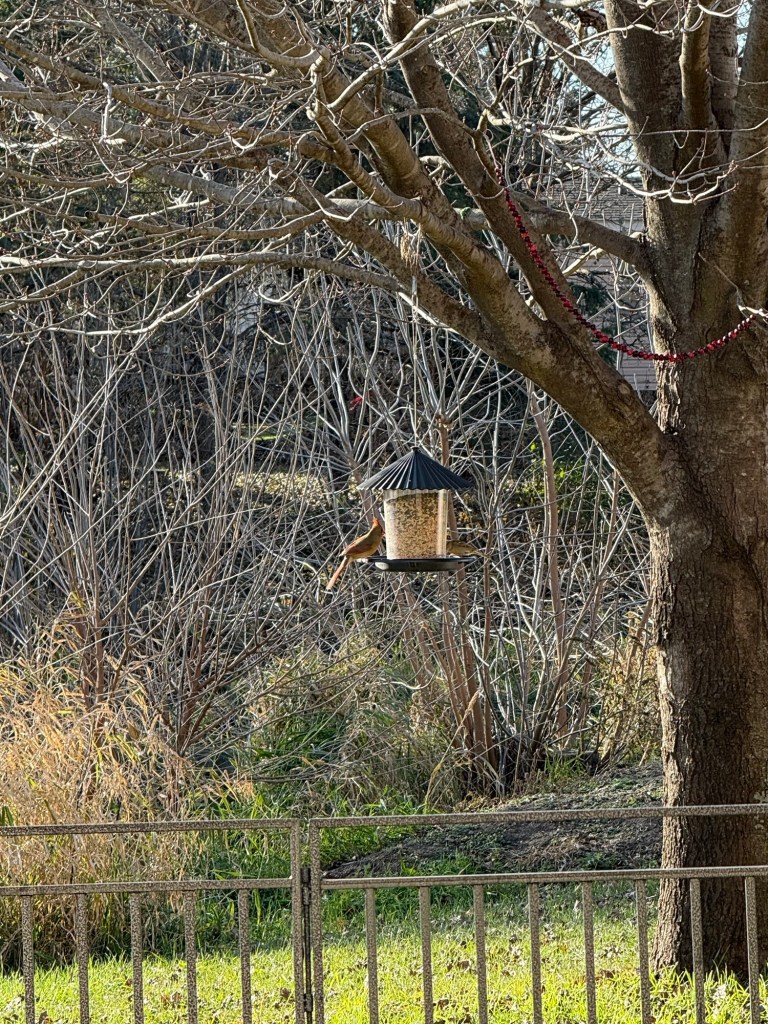
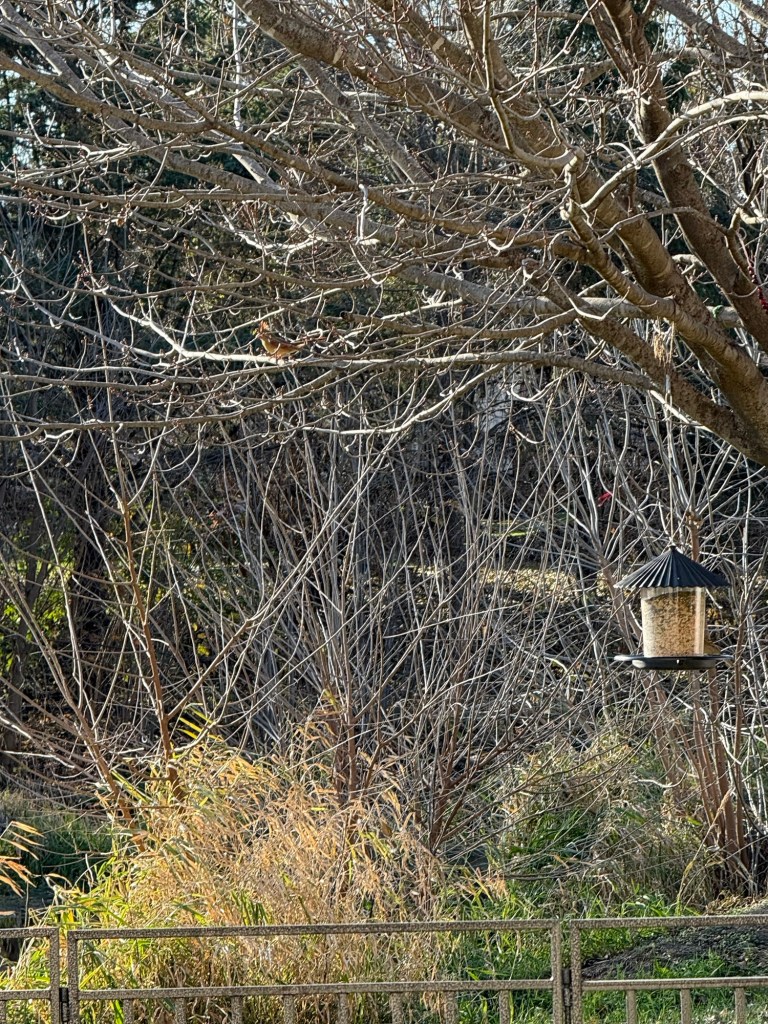
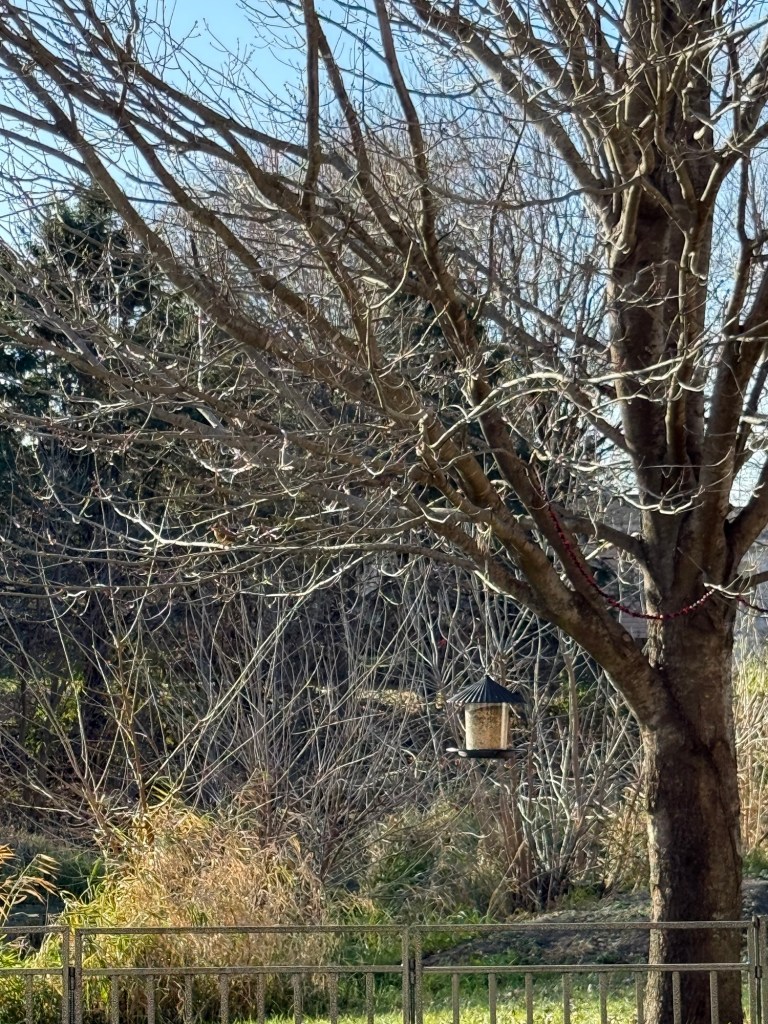
As I continued looking around, I noticed how much more visible the familiar maple trees had become. Their branches were exposed, revealing the little places where birds perch, rest, and move about throughout their day. The cardinals were still visiting the feeders, the smaller birds were still finding their places among the branches, and life was continuing much as it had during the warmer months. The trees looked different, but they certainly weren’t empty.
And that made me think about aging.
We often describe aging by what a person has lost. Their physical abilities may change, familiar routines may become difficult, and activities that once filled their days may no longer be possible in quite the same way. Those losses can be real and significant, and I don’t believe we should pretend otherwise. But I also wonder how often we become so focused on what has changed that we overlook everything that remains.
The maple tree hasn’t stopped being a maple because its leaves are gone. It still provides branches for the birds, shelter for visitors, and a familiar place within the life surrounding the puddle. It has lived through many seasons, each leaving its mark, but its purpose has not disappeared simply because its appearance has changed.
People deserve to be seen with that same understanding.
Sometimes we talk about older adults as though their most meaningful experiences belong entirely to the past. We ask about the jobs they held, the families they raised, the places they traveled, and the memories they have collected. Those stories matter tremendously, but so does what happened yesterday. So does what they hope to experience tomorrow.
A person who has lived many years is still living.
They still have opinions, preferences, relationships, disappointments, curiosities, and wishes. They may discover something new, reconsider a long-held belief, develop a different interest, or simply want the opportunity to enjoy an ordinary afternoon without someone deciding what should matter to them. Their life experience deserves recognition, but it shouldn’t become the only thing others see.
And perhaps that is where we need to do a better job of listening.
We can become so accustomed to knowing someone that we stop asking questions. We assume that because we know their history, we understand their present. We may even begin making decisions based on what someone once wanted without considering whether their wishes have changed.
But people continue becoming themselves throughout their lives.
Maybe we need to ask more often what matters to someone today. What do they enjoy? What do they miss? What would they like to experience again, even if it needs to happen differently? What memories would they like to share, and what wishes have they not yet had the opportunity to express?
And perhaps just as importantly, we need to allow people the choice of what they wish to reveal. Being seen and heard should not require surrendering every bit of privacy or independence. Respecting someone’s identity means acknowledging that their experiences, decisions, and wishes still belong to them.
As the afternoon continued, two familiar doves settled onto a branch near the feeder. They weren’t doing anything particularly remarkable. They were simply sitting together, occasionally changing positions, while the world continued around them. Yet their presence was another reminder that life doesn’t always need to be filled with accomplishments or activity to have meaning.
Sometimes belonging, companionship, and an ordinary moment of comfort are enough.
The trees around the puddle will continue through winter, and eventually another spring may cover their branches with leaves again. Some of the hidden places I’ve discovered may disappear from view, but I will know they are there. I will remember that what I could see was never the entirety of what was happening.
Maybe that is something we should remember about one another, too.
Aging may change how we experience life, but it does not mean we have stopped experiencing it. We are not only the sum of the years we have lived. We are still living them.
And sometimes, when we look beyond what has changed, we discover there is still so much more to see.
Behind the Puddle, where even bare branches have stories to tell.


Leave a Reply